On the Tiwi Islands, a quiet cultural renaissance is taking place. Young women are returning to the traditional art of pandanus weaving, learning from elders and creating beautiful objects that connect them to generations of Tiwi women who came before.
The Tanimi Regional Council's Pandanus Weaving Revival Program, launched two years ago, has exceeded all expectations. What began as a small gathering of interested women has grown into a thriving cultural movement, with over 60 young women now actively practicing the traditional craft.
"When I weave, I feel connected to my grandmother and her grandmother before her. The patterns we create have been passed down through generations. It's not just making baskets—it's keeping our culture alive."
The Art of Pandanus Weaving
Pandanus weaving is a traditional craft practiced by Aboriginal women across northern Australia. On the Tiwi Islands, the art form has distinctive characteristics that reflect the unique environment and culture of the islands.
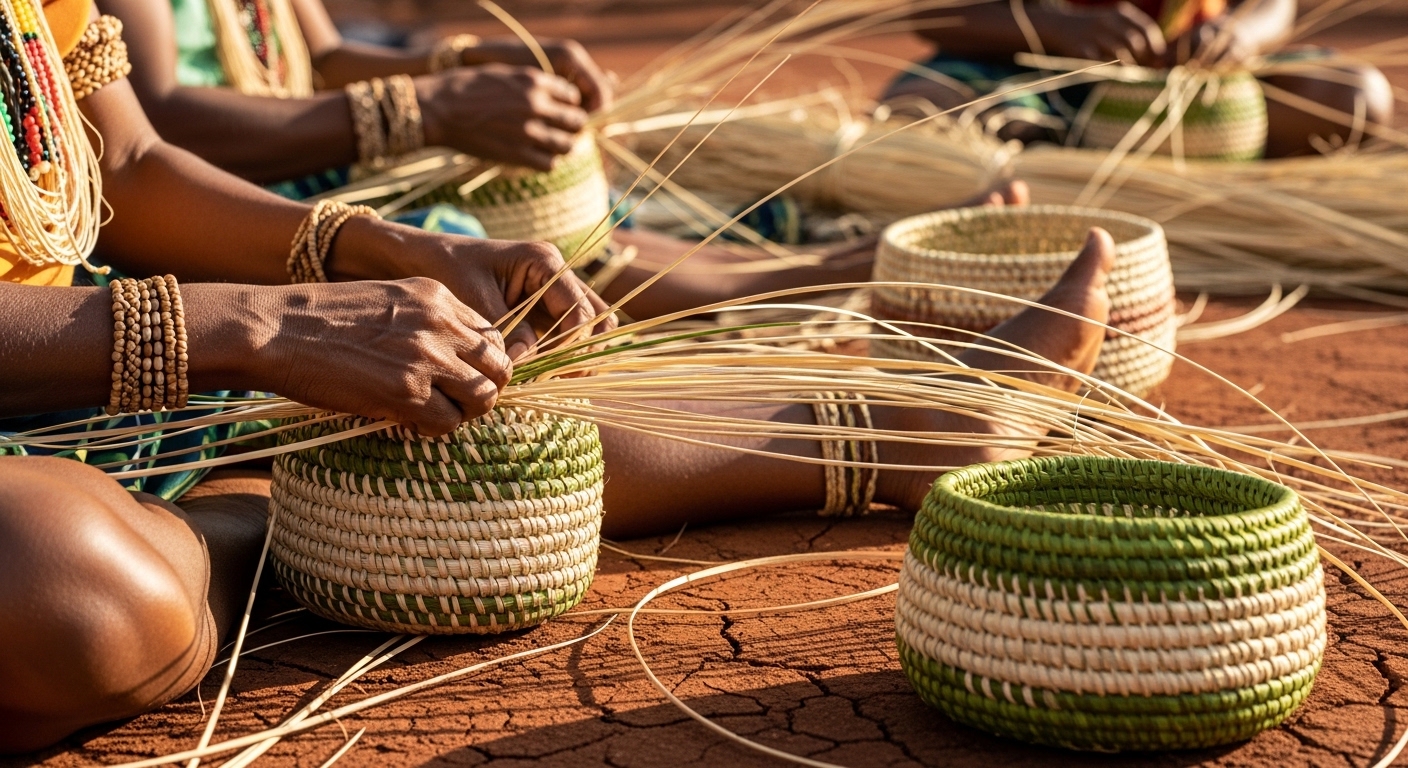
The process begins with collecting pandanus leaves from the spiky palms that grow across the islands. The leaves are stripped of their spines, split into fine strands, and then boiled with natural dyes to create the characteristic colors—rich reds from the kumunungi root, yellows from the roots of the ironwood tree, and earthy browns from various barks and leaves.
The dyed fibers are then dried and rolled into threads, ready for weaving. Using techniques passed down through generations, weavers create baskets, mats, dilly bags, and decorative objects with intricate patterns that tell stories and represent clan designs.
Weaving Program Details
Program Started: March 2024
Current Participants: 60+ women
Age Range: 16-35 years
Meeting Schedule: Weekly workshops
Locations: Wurrumiyanga and Milikapiti
Funding: Tanimi Regional Council and NT Government
Intergenerational Knowledge Transfer
At the heart of the revival program is the relationship between elders and young women. Master weavers, some in their 80s, share their knowledge with the next generation, ensuring that traditional techniques and designs are not lost.
The learning process is immersive and holistic. Young weavers don't just learn the mechanical techniques—they learn about the plants, the seasons for harvesting, the stories behind the designs, and the cultural protocols that govern the craft.
"We don't just teach them how to weave," explains elder Mary Anne Portaminni. "We teach them patience, respect for the materials, and pride in their culture. The basket is the result, but the learning is in the journey."
Economic Opportunities
The weaving revival is creating economic opportunities for Tiwi women. Finished pieces are sold through the islands' art centers, with weavers receiving fair payment for their work. The demand for authentic, high-quality woven objects has grown steadily, with pieces now selling to collectors and galleries across Australia.
Beyond individual sales, the program is exploring larger commercial opportunities. Partnerships with fashion designers and interior specialists are being developed, with woven pieces incorporated into high-end products that command premium prices.
"The women are earning real income from their weaving," says program coordinator Sarah Mitchell. "But more importantly, they're seeing that their traditional skills have value in the modern economy. That's incredibly empowering."
Cultural Significance
Weaving has always been more than a practical skill for Tiwi women. The patterns woven into baskets and mats carry deep cultural meaning, representing clan affiliations, Dreaming stories, and connections to country.
Traditionally, woven objects played important roles in ceremony. Special baskets were created for the Pukumani (mourning) ceremony, while particular designs were reserved for specific clan members. The revival program ensures that this knowledge is documented and transmitted alongside the weaving techniques.
The program also incorporates visits to significant cultural sites, where weavers collect materials and learn about the ancestral connections to the land. These trips reinforce the relationship between the craft, the environment, and Tiwi identity.
Health and Wellbeing Benefits
Participants in the weaving program report significant improvements in mental health and wellbeing. The meditative nature of weaving, combined with the social connection of group sessions, provides a powerful antidote to the stresses of modern life.
"Coming to weaving group is the highlight of my week," says participant Lisa Wanganeen. "It's peaceful, I'm with my friends, and I'm creating something beautiful. It helps me feel grounded and connected."
Health workers on the islands have noted the positive impacts of the program, with participants showing reduced stress levels and improved social engagement. The program is now being studied as a model for cultural interventions that support Indigenous women's health.
Innovation and Tradition
While the program emphasizes traditional techniques, participants are also encouraged to innovate. Contemporary weavers are experimenting with new forms, combining traditional patterns with modern designs, and exploring new applications for woven work.
Recent creations include woven jewelry, sculptural pieces, and collaborative installations that combine weaving with other art forms. These innovations are expanding the possibilities for Tiwi weaving while maintaining respect for tradition.
"Our ancestors were innovators too," points out elder Portaminni. "They adapted their weaving to new materials and new needs. We're just continuing that tradition of creativity."
Looking Forward
The success of the Pandanus Weaving Revival Program has inspired plans for expansion. The Tanimi Regional Council is working to:
- Establish a dedicated weaving center with space for workshops and storage
- Develop a certification program to recognize master weavers
- Create online platforms to market woven products nationally and internationally
- Document traditional patterns and techniques in a comprehensive archive
- Expand the program to include other traditional crafts
Supporting the Revival
Visit the Art Centers: See weaving demonstrations and purchase authentic
works
Workshops: Visitors can book weaving sessions (limited availability)
Online: Follow the program on social media
Contact: weaving@tanamiregionalcouncil.com
Phone: (08) 8978 9000
The pandanus weaving revival represents a powerful example of how traditional culture can thrive in the modern world. By valuing and supporting the knowledge of elders, creating opportunities for young women, and finding new markets for traditional crafts, the Tiwi Islands are ensuring that this ancient art form continues to flourish.